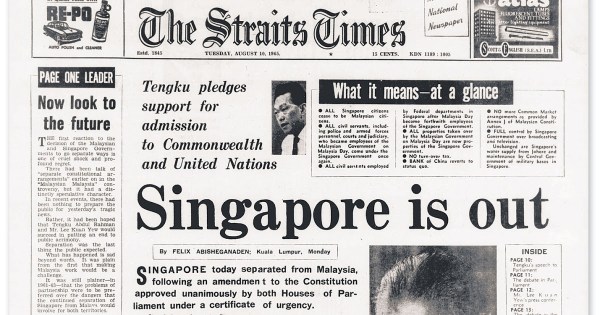
“When, if at all, can a federal political order expel a member state against its will?” This is my response to Can federations expel member states? On the political theory of expulsion by Eva Marlene Hausteiner. I agree that the absence of legal frameworks for expulsion/secession carries potential risks for any given federal system. It... Continue Reading →
ECJ v GATT/WTO: Comparison of approaches towards non-tariff barriers
This is my response to J. H. H. Weiler’s Towards a Common Law of International Trade. In the EU, Art. 34 TFEU prohibits quantitative restrictions and measures with equivalent effect on intra trade. The ECJ played a crucial role in defining the scope and meaning of non-tariff barriers through landmark cases such as the Dassonville... Continue Reading →
Factors of EU Competitiveness in the Changing World
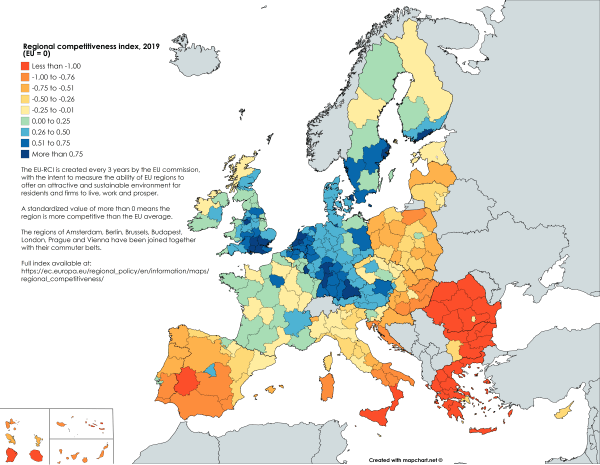
Competitiveness is a somewhat ambiguous term, in the absence of a universal definition of competition's essence and how such competition should be carried out. Competitiveness can be measured and analysed in many different ways and different fields. For many decades, people have used economic growth and GDP per capita as key indicators of a country's... Continue Reading →
Explaining Brexit from Realist and Functionalist Perspectives
Given the complex and evolving nature of the EU as a sui generis organisation, the EU does not quite fit into a traditional IR model. Thus, we are often forced to use one or more models to simplify and explain certain aspects of the EU’s organisational mechanism. However, one model does not fully explain every... Continue Reading →
Fighting over the EU Budget
German Chancellor Merkel called him ‘childish’, and French President Macron used the phrase ‘what arrogance’. These were the remarks concerning Dutch Prime Minister Rutte at the Special European Council meeting on 20-21 February 2020 (Pieters, 2020), where the heads of EU member states gathered to discuss the EU’s long-term budget. Work on the multiannual financial... Continue Reading →